by Pest Killer

Other Pests

When it comes to pests, we often think of rodents, insects, and other small creatures. However, birds, lizards, and snakes can also become unwanted guests in our homes and gardens. While birds may seem harmless, their droppings can cause damage to buildings and carry diseases. Lizards can also cause damage and carry bacteria, while snakes can be dangerous and pose a threat to human safety. In this essay, we will explore the impact of birds, lizards, and snakes as pests and discuss methods for managing their populations and minimizing their impact on human health and wellbeing.

Flying Pests types:

Scientific Name: Aves

Birds

There are more than 10000 species of birds exists in this world and unique in having feather, and wings. Although most are capable of flight, others are sedentary, and some are flightless. Out of these birds, pigeons, sparrows, and seagulls became a nuisance to commercial and residential buildings.

The common types of birds in UAE which nest in the building are the

– Pigeon
– Common Myna
– House Sparrow
– Ring Dove

Birds that breed will invite predatory animals such as rodents, foxes, snakes, and cats. A little bigger birds like pigeons can damage the roof tiles and the can spoil the building hygiene and paint works by their droppings and other particles which they collect from different places as part of nesting. Bird’s droppings may cause transmissible diseases. Ticks, fleas, and mites frequently latch onto common small birds such as pigeons and sparrows. These may become a health hazard to the human when birds bring them to the property.

Most of the birds feed on flower nectar, fruits, seeds, and nuts, there are various species that eat insects, small animals and some eat on dead animals.

All birds construct nests in which to lay eggs and/or raise offspring. Traditionally, it was thought that natural selection and the requirement to minimize the risk of predation determined the design of completed nests. When a bird lays eggs, the incubation period varies quite considerably depending on the species. In most cases, it can take anywhere from 10 days to 30 days for the eggs to hatch. Before the eggs hatch the mother will spend most of their days sitting on the nest while the father provides her with food. A baby bird is blind and featherless. They will open their eyes a few hours after hatching and the feather develops in 15 – 15 days. Most of them can fly in 21 days.

Each bird develops from a single-celled egg, is incubated, hatches, and grows to adulthood. Some bird life cycles involve migration

The lifespan of a bird can vary depending on the species. A bird lives an average of 5– 20 years depends on the species and the environment in which they live. Many bird die-offs are caused by massive trauma to birds’ heads, wings, and bodies from powerful collisions. This can occur when flocks are startled and panicked and their natural agility is compromised. This may lead to collisions with other birds in the air or with obstacles such as buildings, trees, wind turbines, electrical wires, or radio towers.

Scientific Name: Lacertilia

Lizard

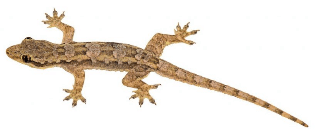
Lizards are reptiles with over 6000 species worldwide. They are scaly-skinned reptiles that are usually distinguished from snakes by the possession of legs, movable eyelids, and external ear openings. The tongue can be extended long outside the mouth, which helps them to catch prey. Lizards are carnivorous and are a sit-and-wait kind of predator.
The most common type of Lizard as a pest is the House Lizard. Insects are their favorite thing to eat and the size of insect lizard eats is depends on its own size. Some species of lizards eat fruits and plants too.
House lizards are known to carry various types of pathogens in their bodies which cause food-poisoning after consuming the contaminated foods. Since these geckos are non-poisonous, the food poisoning due to their presence in food is not possible.

Many lizards are carnivores, which means they eat meat. A typical diet for a lizard includes ants, spiders, termites, cicadas, small mammals and even other lizards. Caiman lizards eat animals with shells, such as snails. Other lizards are omnivores, which means they eat vegetation and meat. One example of an omnivore lizard is Clark’s spiny lizard. These lizards like fruits, leaves and vegetables.

Majority of lizards are egg laying in nature. They reproduce through mating, and once fertilized, the female lays eggs. These eggs are laid in clutches of two, several weeks apart, adding up to 8 or more in a season. If it’s warm year-round, they may simply continue laying eggs year-round.

In most species of lizards, the life cycle begins with the lizard hatching from an egg, eggs take about 40-60 days to hatch, although a few species give birth to live young. Juvenile lizards then grow into adults without undergoing a metamorphosis. Adults mate and lay eggs and the cycle begins again.

The lifespan of a lizard can vary depending on the species. Their lifespan is an average of 10 years but some species will live double the lifespan.

Scientific Name: Serpentes

Snake

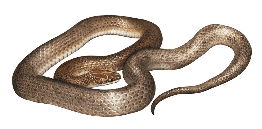
Snakes are lengthy, legless reptiles. There are more than 3400 species of snakes available worldwide which includes both venomous and nonvenomous species. Snakes are able to swallow prey much larger than the size of their head. They sense approaching animals by detecting the vibration in the ground. The skin of the snake covered in overlapping scales. The eyelids of a snake are transparent “spectacle” scales, which remain permanently closed. Snake venom is a highly modified saliva containing zootoxins that facilitate the immobilization and digestion of prey and defense against threats. It is injected by unique fangs during a bite, and some species are also able to spit their venom.

The most common type of snakes in UAE :

Annulated Sea Snake
Arabian Cat Snake
Arabian Cobra
Arabian Gulf Sea Snake
Arabian Horned Viper
Arabian Sand Boa
Awl-Headed Snake
Beaked Sea Snake
Brahminy Blind Snake
Diadem Snake
Hooked Thread Snake
Hooded Malpolon
Saw-Scaled Viper
Persian (False) Horned Viper
Schokari Sand Racer
Wadi Racer
Yellow Sea Snake


Most of the above are totally harmless, and have no venom glands at all – these types only have small teeth, which they use to hold on to their food (mostly mice). The Saw-Scaled Viper is a type of venomous snake that is frequently sighted in Dubai and the UAE.

Snakes don’t usually have any reason to harm people. They would usually prefer to slither away than to attack. Like many other wild animals, though, when venomous snakes feel threatened by humans, they can strike. One unusual trait of snakes is that they can control how much venom to release into their targets. Venomous snake bites can produce a list of symptoms, including localized pain and swelling, convulsions, nausea, and even paralysis.
All snakes are carnivores. Their diet depends on the species. Some eat warm-blooded prey (e.g., rodents, rabbits, birds), while others eat insects, amphibians (frogs or toads), eggs, other reptiles, fish, earthworms, or slugs. Snakes swallow their food whole. Larger snakes also eat whole rabbits.

Snakes produce offspring in 2 ways; by lay eggs or give birth to live young. It varies from species. Some species of snake are retain the eggs within their bodies until they are almost ready to hatch. Snakes eggs are leathery and soft not hard like a chicken or a bird egg and they keep it in a hollow or hole in the ground.

In most species of snakes, the life cycle begins with the snake hatching from an egg, eggs take about 45 – 90 days to hatch, although a few species give birth to live young. Juvenile snake then grow into adults without undergoing a metamorphosis. Adults mate and lay eggs and the cycle begins again.

The lifespan of a snakes can vary depending on the species. Their lifespan is 13 – 18 years.

Learn how we helped 100 top brands gain success.

    we will contact you within 24 hours.

    This site is protected by reCAPTCHA and the Google Privacy Policy and Terms of Service apply.
    Send Now
    1
    Online NOW!
    Hello,

    How we can help you?